Your gym looks clean. Your members' skin knows better.
Your gym looks clean. Your members' skin knows better.
Your gym looks clean. Your members' skin knows better.
Your gym looks clean. Your members' skin knows better.
Every surface in a gym, health club or spa is in contact with bare skin, sweat or an open pore. A spray bottle and a cloth were never built for that. Here is what dry steam and vacuum extraction actually does, zone by zone, and the numbers behind it.
Walk into most gyms, health clubs or spas and everything looks fine. The mats are wiped, the showers smell of disinfectant, the massage table has a fresh sheet on it. But "looks fine" and "is clean" are two different things, and in this industry the gap between them matters more than almost anywhere else. Your members lie on your mats, sit in your sauna, shower barefoot in your change rooms and let your therapists' hands and tools touch their skin.

A chemical wipe-down moves bacteria and fungus around. It doesn't kill what is living on the surface, and it leaves residue behind, exactly what you don't want on a yoga mat someone's face is about to touch, or a treatment table someone's bare back is about to lie on. Dry steam works differently. It cleans with heat and pressure instead of chemistry, hot enough to kill what is there rather than mask the smell of it. That is the same standard we build for HACCP-regulated food manufacturing plants, and it is exactly what a facility built around bare skin and shared surfaces needs.
Chemistry works at room temperature. Heat doesn't have to.
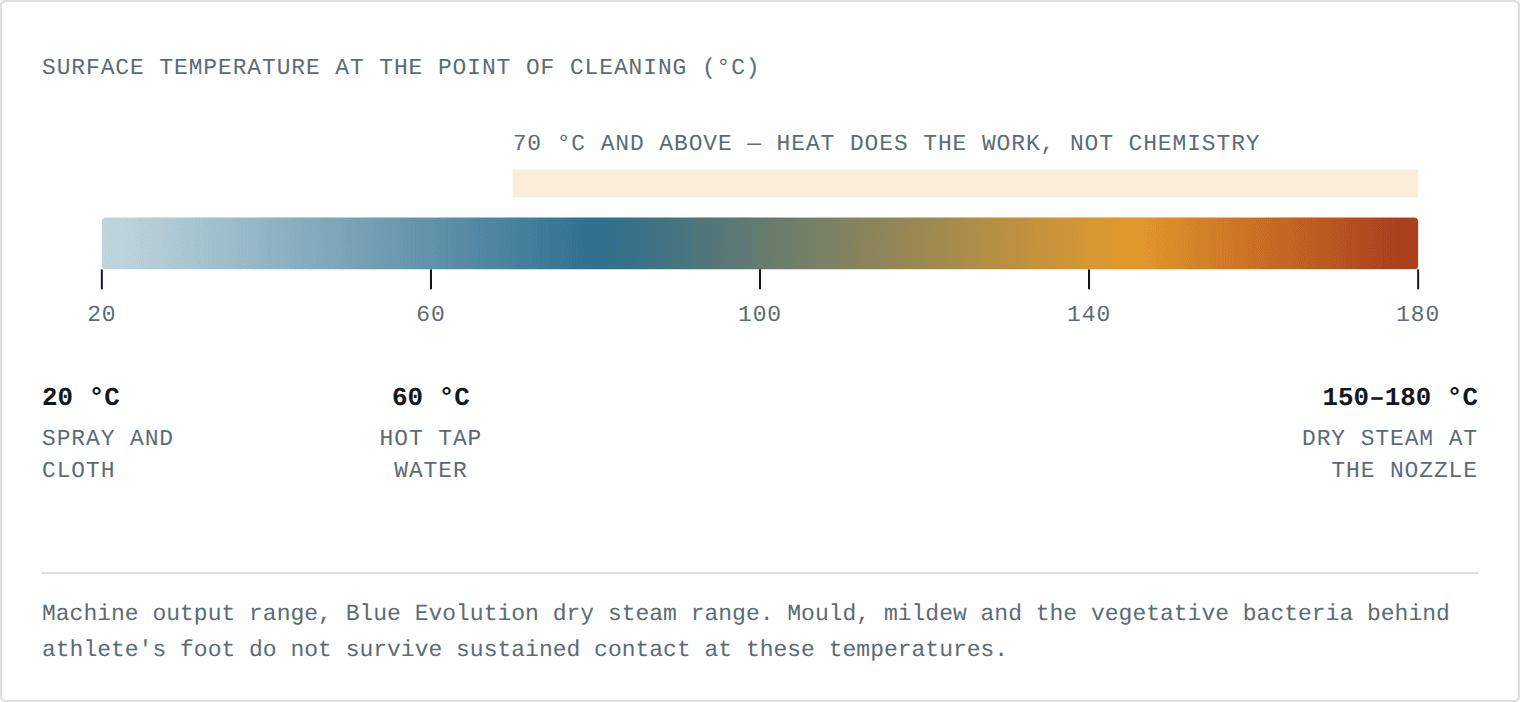
The reason a wipe-down disappoints has nothing to do with effort and everything to do with temperature. A cloth and a spray operate at about 20 °C, so the entire job falls to the chemical, and the chemical needs contact time, correct dilution and a surface it can actually reach. Steam leaves a Blue Evolution nozzle at 150–180 °C. Nothing needs diluting, nothing needs dwelling, and grout lines, grip texture, bench slats and seat hinges get the same treatment as flat surfaces.
Zone by zone
Gym floor, mats and free weights
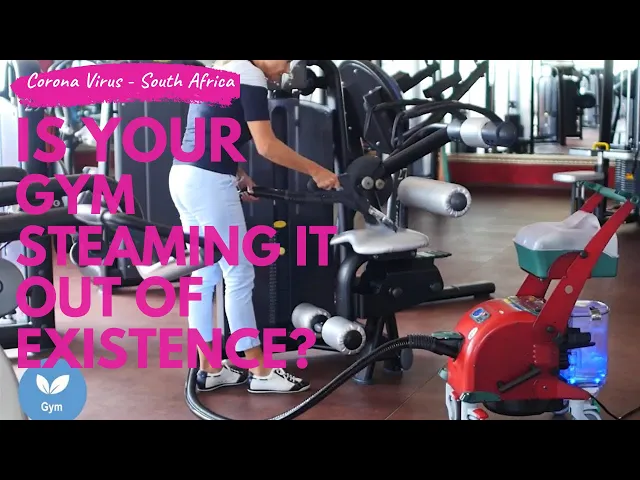
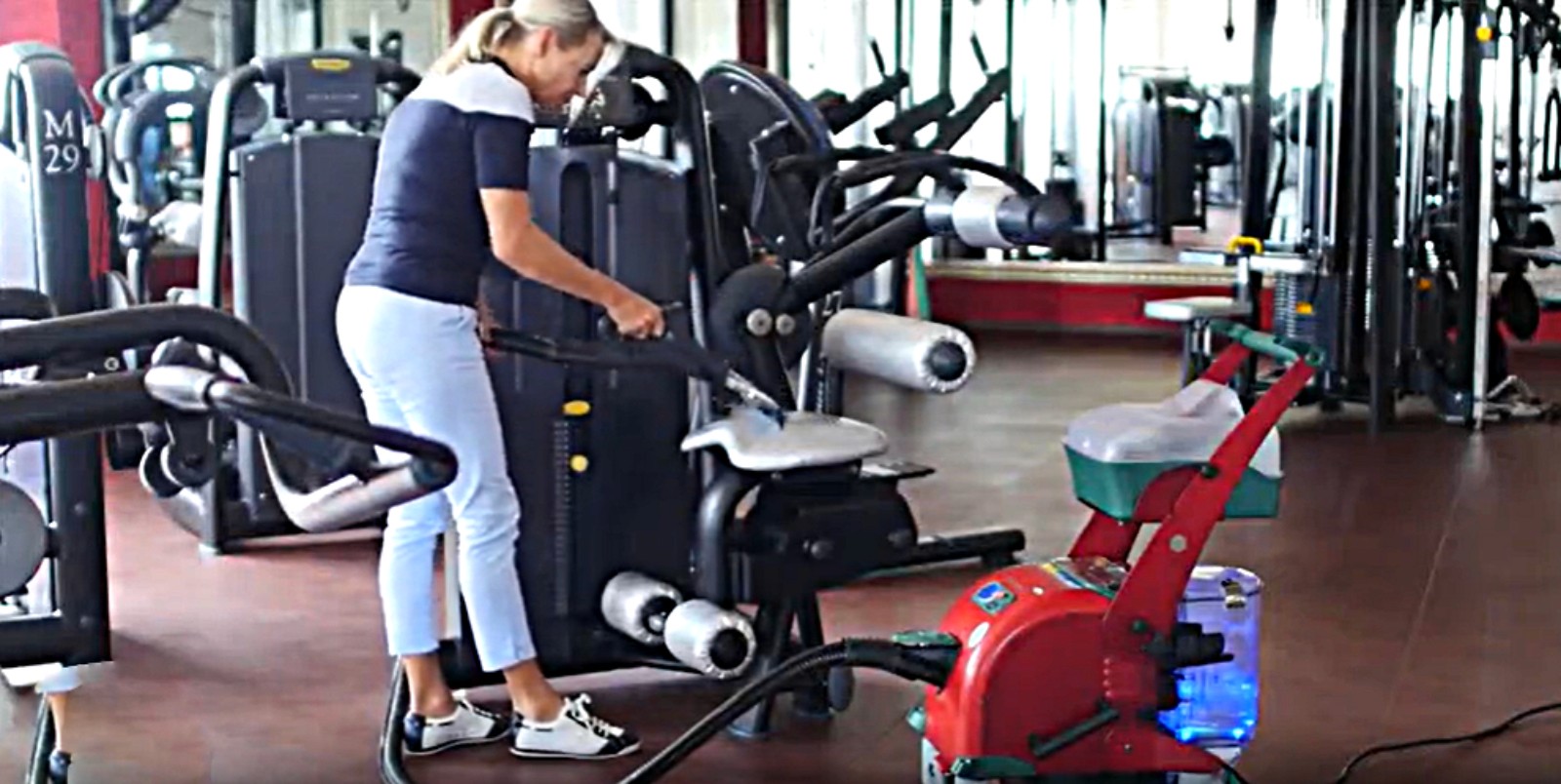
Mats, benches, dumbbells and machine grips take hundreds of sweaty hands and bare feet a week, and most gyms treat them with the same spray used on a bathroom counter. Steam and vacuum run in the same pass: the heat sanitises while the extraction pulls sweat, body oil, skin cells and dust-mite allergens out of the padding, the seams and the grip texture. A wipe leaves that load sitting inside the foam, where it soaks moisture straight back in the next time someone lies down.

Treadmills, bicycles and cardio equipment
Spin saddles, handlebars, treadmill belts, decks, side rails and cross-trainer grips hold body oil and sweat deep in the plastic grain and rubber, and the electronics mean nobody wants to soak them. Heat emulsifies the oil and grease, the vacuum lifts it off in the same movement, and because the machine takes back what it puts down there is almost no moisture left anywhere near a console, motor housing or bearing. The equipment is back in the rotation minutes later.
Change rooms and showers
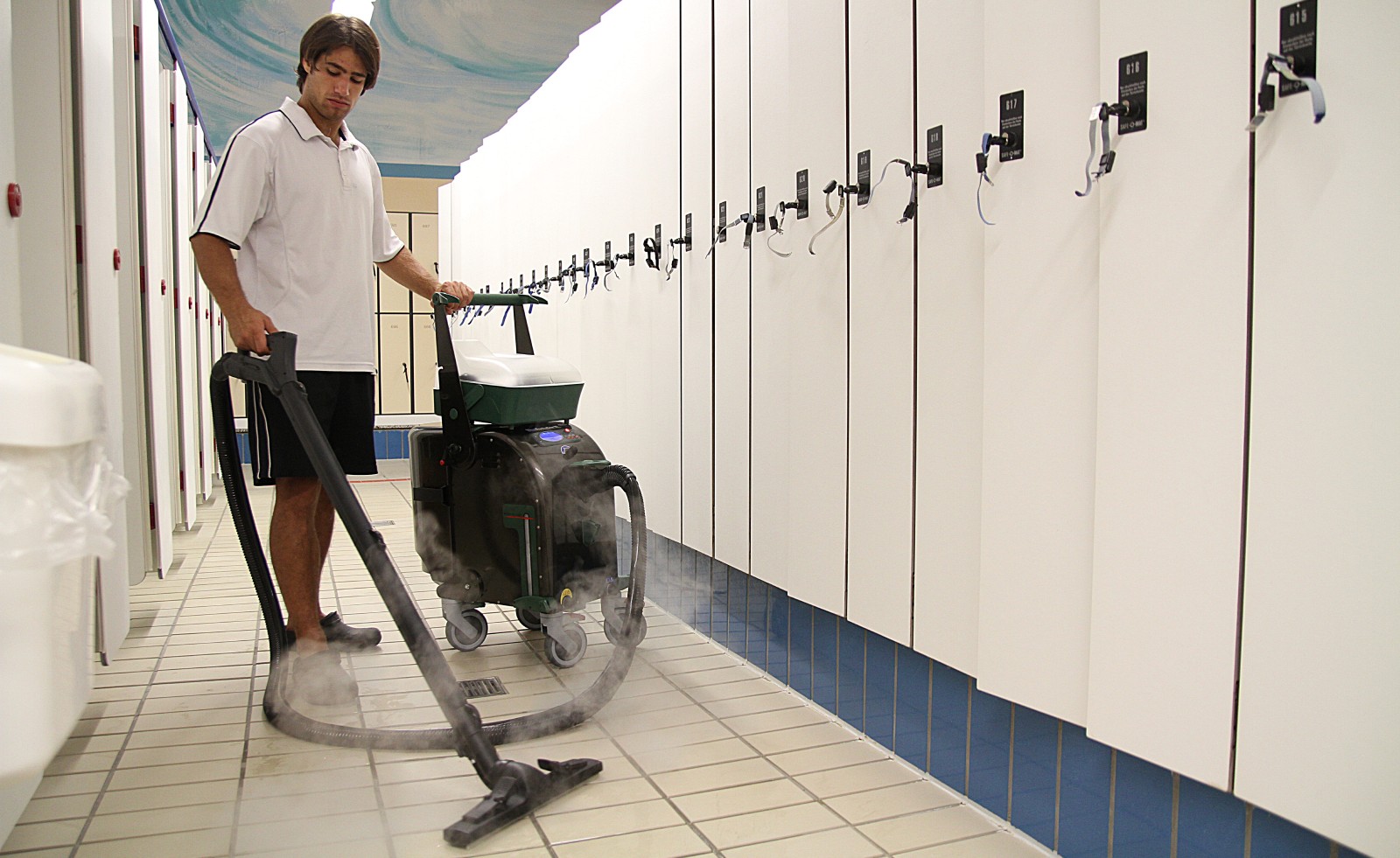
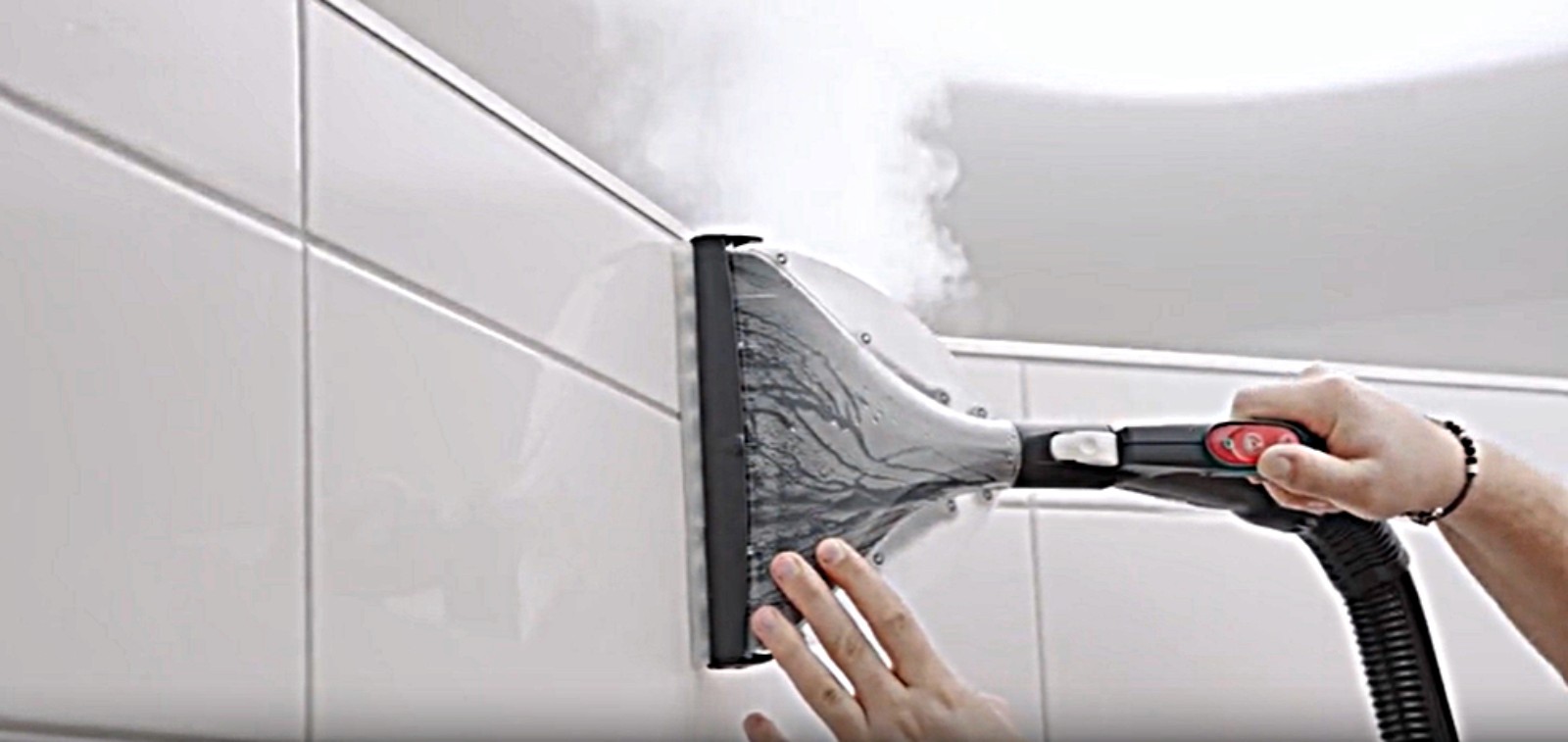
The classic problem zone, for good reason: warm, wet, barefoot. Mould, mildew and fungal bacteria thrive exactly there, and bleach fights them for a day while leaving residue behind. Steam reaches grout, drain edges, bench slats and locker bases at a temperature nothing survives, and the vacuum removes the loosened biofilm, soap scum and hair instead of a mop pushing it into the next grout line. Nothing is left standing on the floor when the pass is done.
Toilets and washrooms
A cloth carries bacteria from one surface to the next, and a bucket carries it around the room. Steam and extraction sanitise and remove in the same movement across the pan, seat hinges, cistern, taps, dispensers and the grout behind them, with the waste and moisture drawn straight into the machine rather than wrung out and taken to the next surface. The odour leaves with it, instead of being covered by fragrance.
Sauna and steam room
Timber benches are among the hardest surfaces to sanitise: they cannot take harsh chemicals without damage, and bare skin sits on them at high heat. Dry steam sanitises the wood without damaging it, and the extraction is what protects the timber, the moisture and the loosened body oil come straight back out of the grain rather than soaking in, so the benches are dry within minutes and there is no residue for the heat to reactivate against skin.

Spa treatment rooms
Massage tables, facial equipment and trolleys need a standard closer to a clinic than a gym, and oils, wax and exfoliants build up in a way a cloth only smears. Heat emulsifies the oil and wax and the vacuum draws it off the surface completely, including out of the upholstered table padding where it usually accumulates unseen. No fragrance overlay fighting the calm the room is selling, and the compact unit fits in the room without disrupting it.
Kiddies centre and crèche
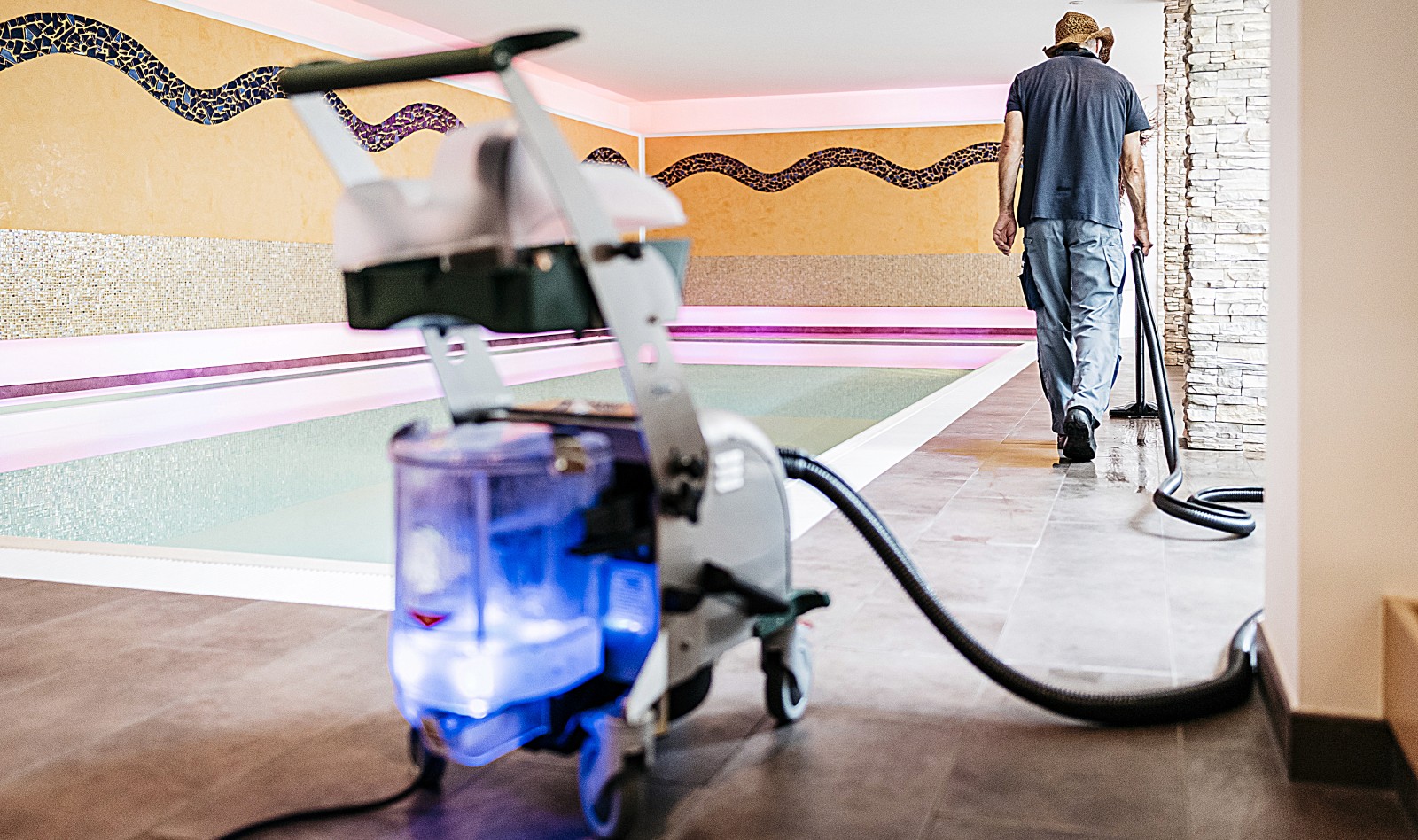
Floors, soft play, plastic toys, tables and door handles, children put their hands and mouths on all of it. Chemical-free is the entire point in this zone, and extraction is what makes it work: spilled food, juice, dust mites and allergens come out of the soft play and carpet rather than being sponged deeper into it. Steam sanitises hard and soft surfaces alike and leaves no residue for a toddler to find, which is the one answer parents actually ask you for.
Reception, lounge and glass
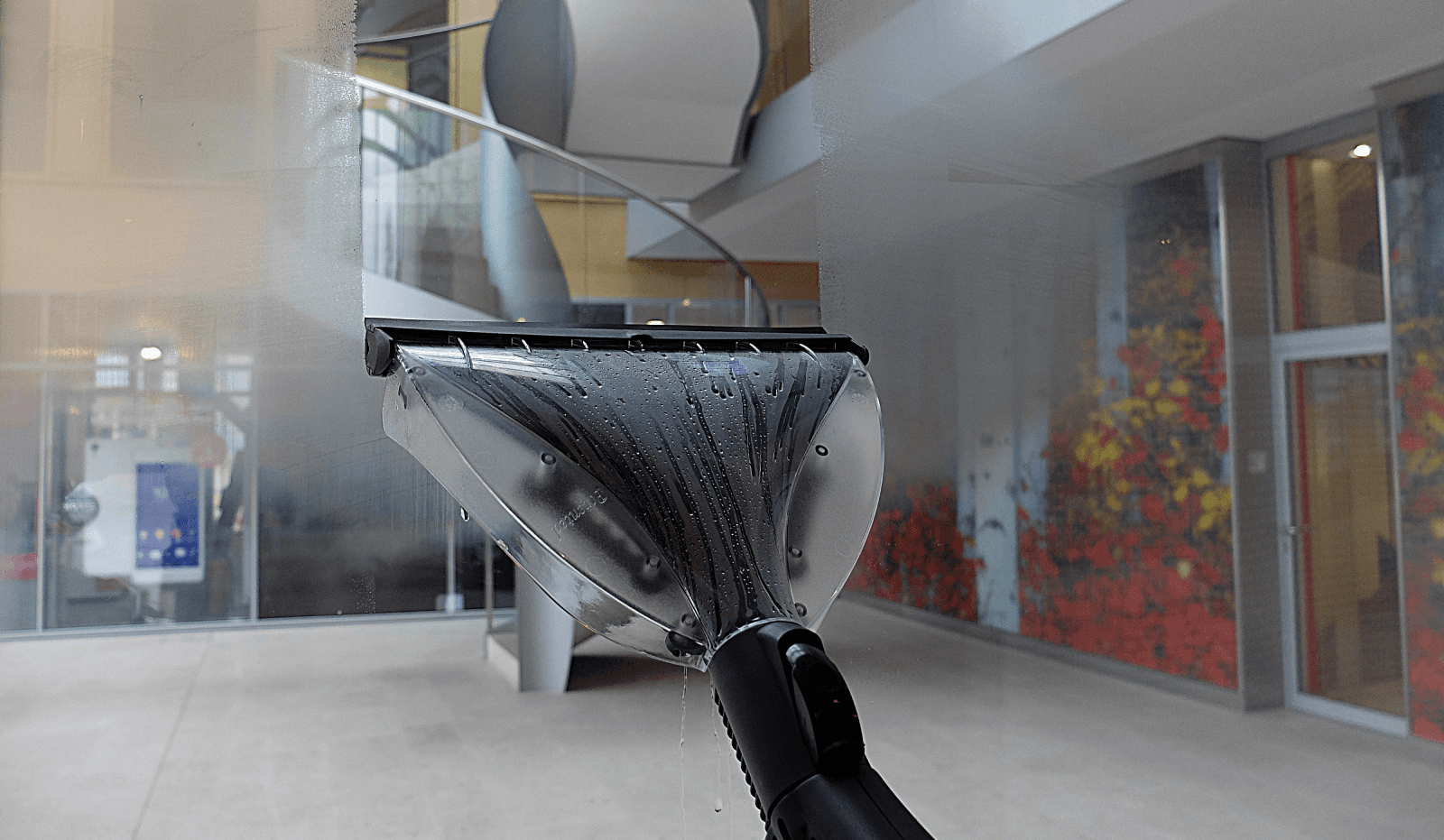
Upholstery, carpets, counters, card machines and door handles collect the everyday grime a spray just moves around. A steam-and-vacuum pass lifts it out of the fabric along with the odour, which is the difference between reception seating that looks clean and reception seating that is clean. Mirrors, studio partitions and front-door glass come up streak-free with a squeegee head and no chemical spray, in the first space a member or client ever experiences.
Steam and vacuum, in the same pass
Blue Evolution machines don't only apply steam, they extract while they clean. The head that puts steam down pulls it straight back up along with whatever was living on the surface: sweat, skin cells, body oil, dirt and the bacteria feeding on all of it. On mats, padding and upholstered seating that is the difference between killing what sits on the surface and pulling it out of the fabric, instead of leaving it to soak sweat back in the next time someone lies down.
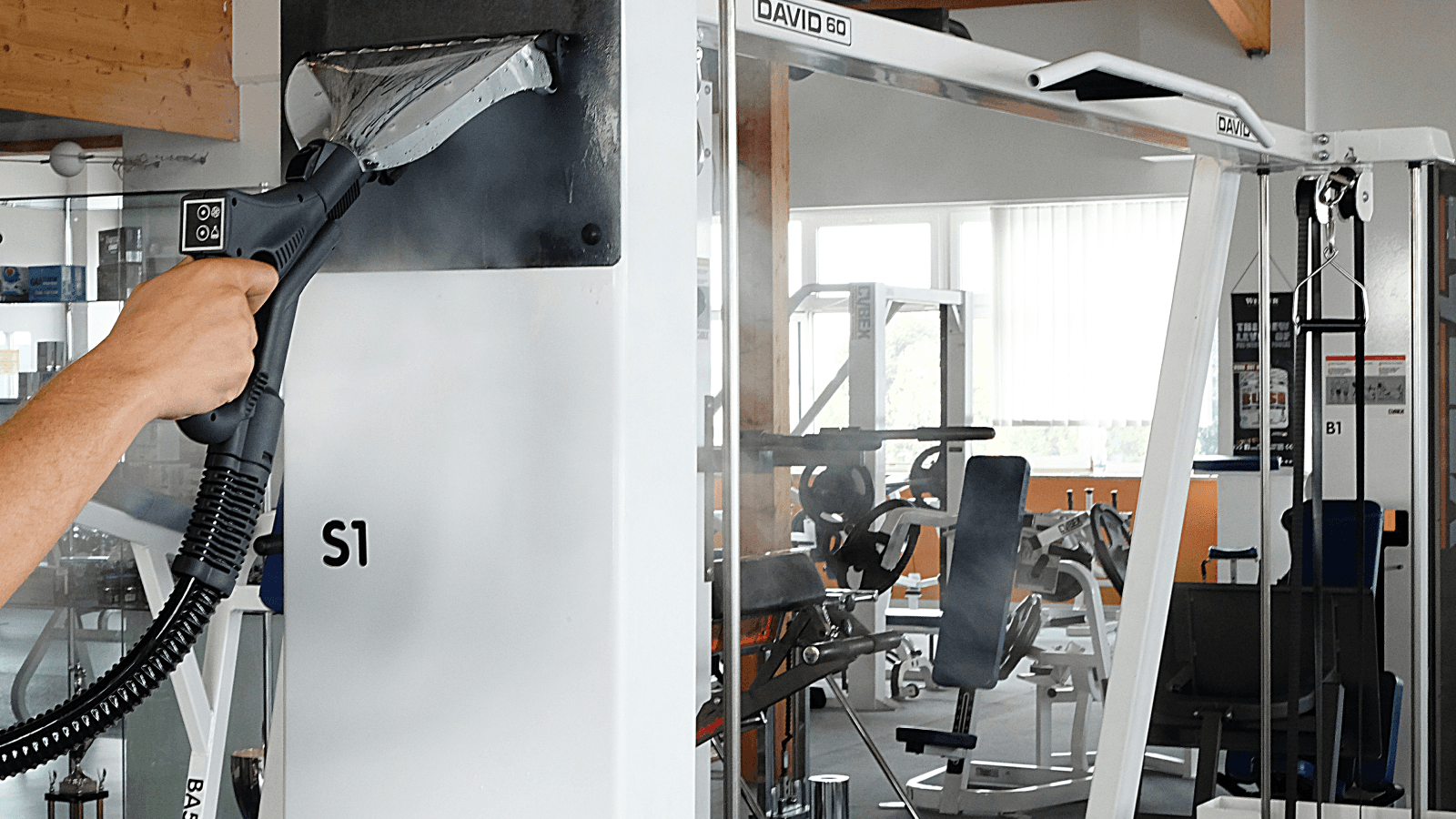
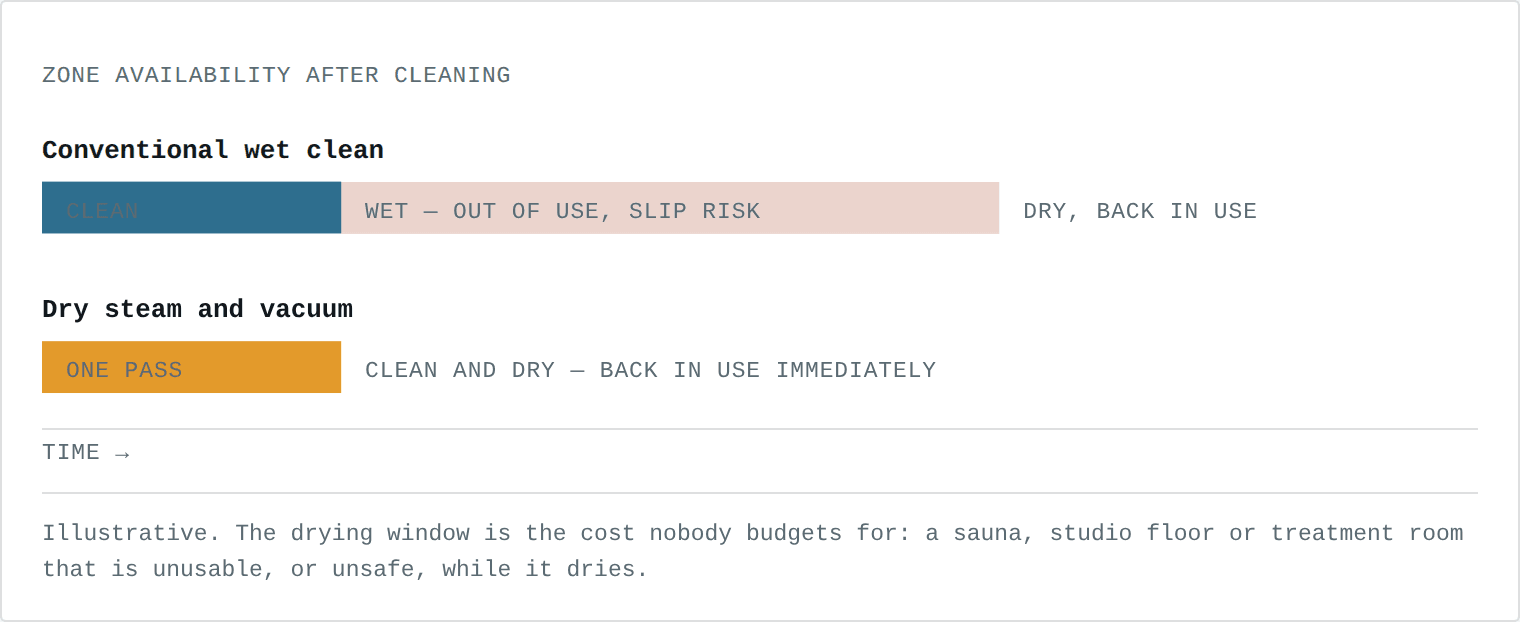
That extraction is also why floors and equipment come up close to dry — and this is the part most cleaning methods simply ignore. A wet floor after cleaning is a slip-and-fall risk sitting in a space full of people moving quickly between machines in socks or bare feet. Steam and vacuum together take a surface from dirty straight to dry in one pass, so there is never a window where the freshly cleaned floor is more dangerous than the dirty one it replaced. It is faster for the same reason: one pass instead of clean, wait, dry.
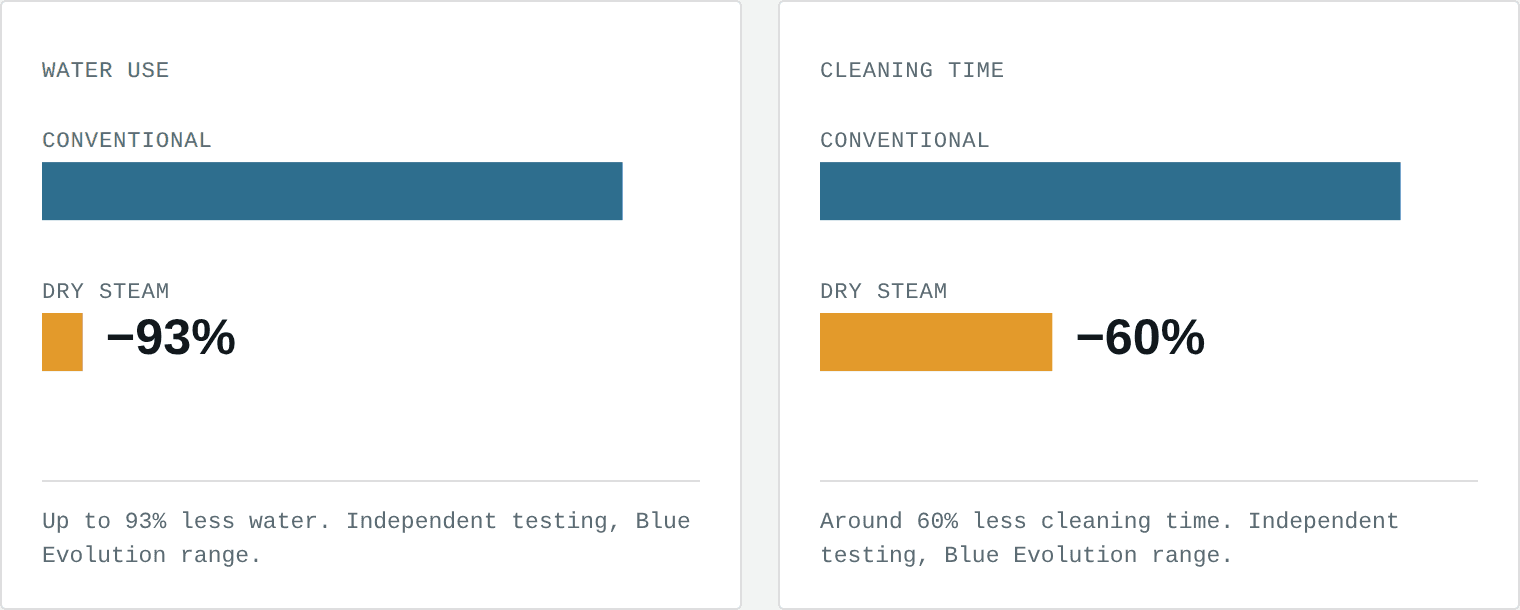
What the numbers look like

Every bottle you remove from the cleaning cupboard is one less line item, one less thing a staff member needs training on, and one less risk sitting in a space members walk through. Right now, whoever cleans the sauna is probably trained differently to whoever wipes down the treatment rooms. One machine means one process everywhere, and staff who can move between zones without relearning the job.
HACCP-grade sanitising is a credential food manufacturers fight for. Very few gyms, health clubs or spas in South Africa can say their cleaning process meets that bar, and the ones that can have a real differentiator sitting in their marketing.
What it buys your members
Nothing left behind to react to. No chemical smell on a mat, no residue on a treatment table, no fragrance fighting the calm a spa is selling. For members with allergies or sensitive skin, that difference is the whole reason they choose one facility over another, and for a parent standing in the door of your kiddies centre, it is the only thing they want to hear.
A standard they trust without ever asking about it. Nobody compliments a clean change room. They notice, and remember, the one that wasn't clean, or that smelled of bleach covering something up. Steam gets you the version where there is nothing to notice, which is exactly the point.
Faster turnaround, more availability. Surfaces come up close to dry, so a sauna, treatment room, studio floor or equipment zone is back in use in minutes rather than at the end of a drying cycle.
Questions members and owners actually ask
These are the questions that come up over and over in gym and spa forums, review threads and community groups. If you manage a facility, your members are asking them whether or not they ask you.
How often should gym equipment actually be cleaned?
High-touch equipment, grips, handlebars, benches, mats, needs attention daily, and a deep sanitising pass at least weekly. Member wipes between sets help with visible sweat but do nothing about what has built up inside grip texture, padding seams and upholstery over months. That deeper build-up is what a dry steam pass removes.
Can you catch anything from gym showers and change rooms?
Yes, and it is the most common complaint in gym reviews. Athlete's foot, verrucae, ringworm and folliculitis all spread in warm, wet, barefoot spaces. The fungi and bacteria behind them live in grout lines, drain edges, bench slats and locker bases, the exact places a mop and a bleach spray reach last. Heat reaches them and kills them at source.
Do the spray bottles and paper towels at the gym actually work?
Partially. Most disinfectants need several minutes of wet contact time to work as labelled, and a member wiping a bench for three seconds before moving on gets nowhere near that. Wipe-downs mostly redistribute what is there and leave a chemical film. They are a courtesy, not a cleaning programme.
Is steam cleaning better than disinfectant for gym equipment?
They do different jobs. A disinfectant relies on chemistry, correct dilution and dwell time. Dry steam relies on temperature, 150–180 °C at the nozzle, so it works on contact, reaches into texture and seams a cloth cannot, and leaves no residue on a surface that touches bare skin. For skin-contact surfaces, that residue-free result is the deciding factor.
Can you steam clean treadmills and exercise bikes without damaging the electronics?
Yes, when the machine is a dry steam unit rather than a wet steam mop. Dry steam carries very little moisture, and a steam-and-vacuum head extracts what it puts down in the same pass. Keep the nozzle off consoles and open ports, work on belts, decks, rails, saddles and grips, and the equipment is back in the rotation within minutes.
Is dry steam safe on yoga mats, upholstery and sauna wood?
All three, with the right head and technique. Mats and upholstery benefit most from the extraction, because the sweat and skin cells come out of the fabric rather than being sealed back in. Sauna timber is the strongest case of all: it cannot take harsh chemicals without damage, and steam sanitises it with nothing left behind for the heat to reactivate against skin.
Why does a gym still smell even when it has just been cleaned?
Because the source is inside the material, not on top of it. Sweat, body oil and bacteria soak into padding, carpet backing, upholstery and grout, and a surface wipe or a fragranced cleaner only covers the smell for a few hours. Steam and vacuum extraction removes the material the odour is coming from, which is why the result lasts.
Can a facility go chemical-free and still meet hygiene requirements?
Largely, yes. Dry steam handles sanitising across floors, equipment, washrooms, glass and soft furnishings, and most facilities end up keeping only a small number of specific products rather than a full cupboard. Because the method is the same standard used in HACCP-regulated food plants, the hygiene case is easier to make, not harder.
See it on your own equipment
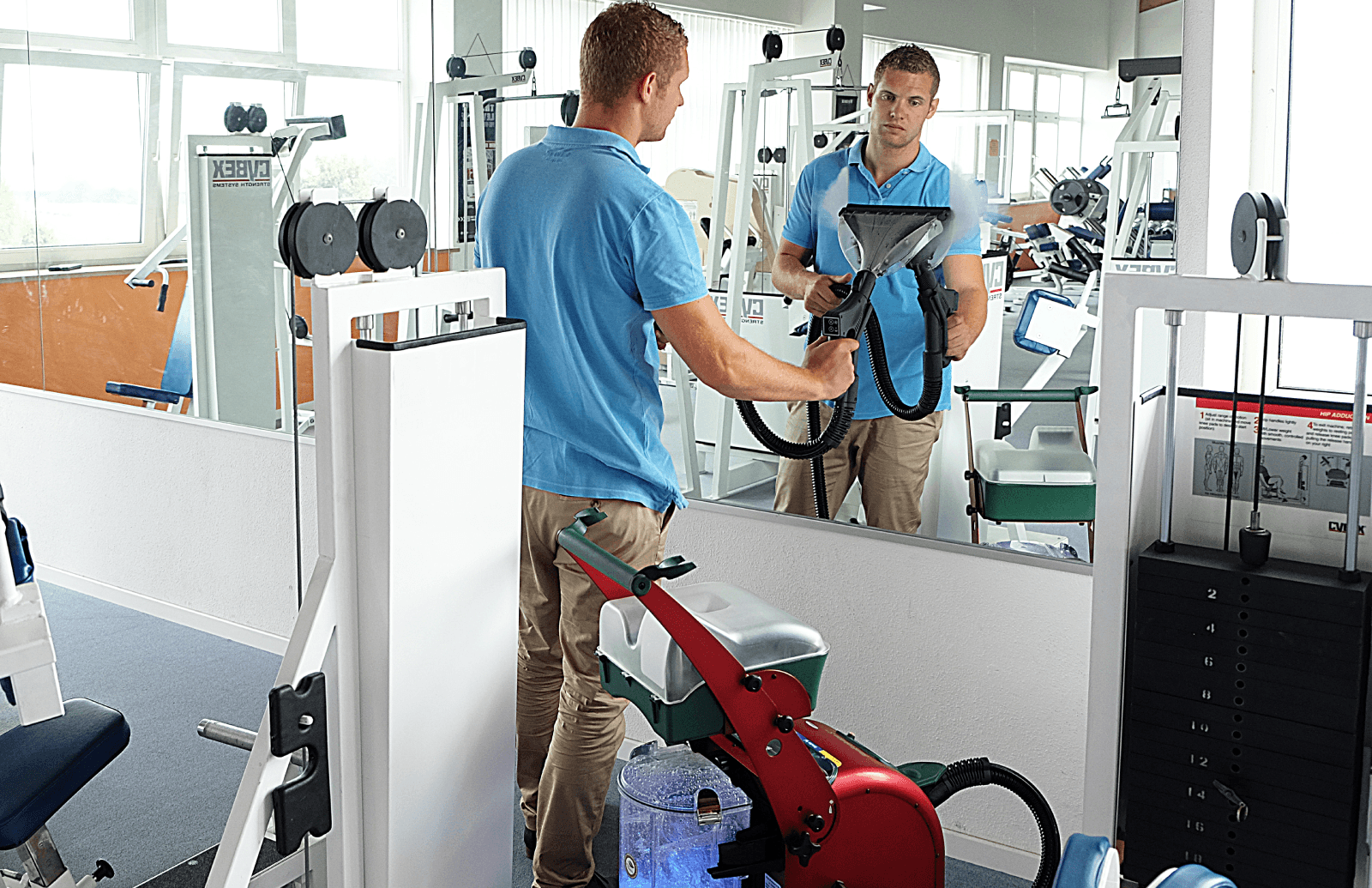
Walk your facility zone by zone and add up where water, chemicals and staff hours are actually going. It is usually a bigger number than expected. Then let us come out and run the machine on your gym floor, your change rooms or a treatment table, no obligation, just the steam doing the work in front of you.
P.S: You don't have to solve every zone at once. Most facilities start with whichever one is generating the most complaints right now, see it work, and expand from there. Tell us which zone that is and we'll start there.
Your gym looks clean. Your members' skin knows better.
Every surface in a gym, health club or spa is in contact with bare skin, sweat or an open pore. A spray bottle and a cloth were never built for that. Here is what dry steam and vacuum extraction actually does, zone by zone, and the numbers behind it.
Walk into most gyms, health clubs or spas and everything looks fine. The mats are wiped, the showers smell of disinfectant, the massage table has a fresh sheet on it. But "looks fine" and "is clean" are two different things, and in this industry the gap between them matters more than almost anywhere else. Your members lie on your mats, sit in your sauna, shower barefoot in your change rooms and let your therapists' hands and tools touch their skin.
A chemical wipe-down moves bacteria and fungus around. It doesn't kill what is living on the surface, and it leaves residue behind, exactly what you don't want on a yoga mat someone's face is about to touch, or a treatment table someone's bare back is about to lie on. Dry steam works differently. It cleans with heat and pressure instead of chemistry, hot enough to kill what is there rather than mask the smell of it. That is the same standard we build for HACCP-regulated food manufacturing plants, and it is exactly what a facility built around bare skin and shared surfaces needs.
Chemistry works at room temperature. Heat doesn't have to.
The reason a wipe-down disappoints has nothing to do with effort and everything to do with temperature. A cloth and a spray operate at about 20 °C, so the entire job falls to the chemical, and the chemical needs contact time, correct dilution and a surface it can actually reach. Steam leaves a Blue Evolution nozzle at 150–180 °C. Nothing needs diluting, nothing needs dwelling, and grout lines, grip texture, bench slats and seat hinges get the same treatment as flat surfaces.
Zone by zone
Gym floor, mats and free weights
Mats, benches, dumbbells and machine grips take hundreds of sweaty hands and bare feet a week, and most gyms treat them with the same spray used on a bathroom counter. Steam and vacuum run in the same pass: the heat sanitises while the extraction pulls sweat, body oil, skin cells and dust-mite allergens out of the padding, the seams and the grip texture. A wipe leaves that load sitting inside the foam, where it soaks moisture straight back in the next time someone lies down.
Treadmills, bicycles and cardio equipment
Spin saddles, handlebars, treadmill belts, decks, side rails and cross-trainer grips hold body oil and sweat deep in the plastic grain and rubber, and the electronics mean nobody wants to soak them. Heat emulsifies the oil and grease, the vacuum lifts it off in the same movement, and because the machine takes back what it puts down there is almost no moisture left anywhere near a console, motor housing or bearing. The equipment is back in the rotation minutes later.
Change rooms and showers
The classic problem zone, for good reason: warm, wet, barefoot. Mould, mildew and fungal bacteria thrive exactly there, and bleach fights them for a day while leaving residue behind. Steam reaches grout, drain edges, bench slats and locker bases at a temperature nothing survives, and the vacuum removes the loosened biofilm, soap scum and hair instead of a mop pushing it into the next grout line. Nothing is left standing on the floor when the pass is done.
Toilets and washrooms
A cloth carries bacteria from one surface to the next, and a bucket carries it around the room. Steam and extraction sanitise and remove in the same movement across the pan, seat hinges, cistern, taps, dispensers and the grout behind them, with the waste and moisture drawn straight into the machine rather than wrung out and taken to the next surface. The odour leaves with it, instead of being covered by fragrance.
Sauna and steam room
Timber benches are among the hardest surfaces to sanitise: they cannot take harsh chemicals without damage, and bare skin sits on them at high heat. Dry steam sanitises the wood without damaging it, and the extraction is what protects the timber, the moisture and the loosened body oil come straight back out of the grain rather than soaking in, so the benches are dry within minutes and there is no residue for the heat to reactivate against skin.
Spa treatment rooms
Massage tables, facial equipment and trolleys need a standard closer to a clinic than a gym, and oils, wax and exfoliants build up in a way a cloth only smears. Heat emulsifies the oil and wax and the vacuum draws it off the surface completely, including out of the upholstered table padding where it usually accumulates unseen. No fragrance overlay fighting the calm the room is selling, and the compact unit fits in the room without disrupting it.
Kiddies centre and crèche
Floors, soft play, plastic toys, tables and door handles, children put their hands and mouths on all of it. Chemical-free is the entire point in this zone, and extraction is what makes it work: spilled food, juice, dust mites and allergens come out of the soft play and carpet rather than being sponged deeper into it. Steam sanitises hard and soft surfaces alike and leaves no residue for a toddler to find, which is the one answer parents actually ask you for.
Reception, lounge and glass
Upholstery, carpets, counters, card machines and door handles collect the everyday grime a spray just moves around. A steam-and-vacuum pass lifts it out of the fabric along with the odour, which is the difference between reception seating that looks clean and reception seating that is clean. Mirrors, studio partitions and front-door glass come up streak-free with a squeegee head and no chemical spray, in the first space a member or client ever experiences.
Steam and vacuum, in the same pass
Blue Evolution machines don't only apply steam, they extract while they clean. The head that puts steam down pulls it straight back up along with whatever was living on the surface: sweat, skin cells, body oil, dirt and the bacteria feeding on all of it. On mats, padding and upholstered seating that is the difference between killing what sits on the surface and pulling it out of the fabric, instead of leaving it to soak sweat back in the next time someone lies down.
That extraction is also why floors and equipment come up close to dry — and this is the part most cleaning methods simply ignore. A wet floor after cleaning is a slip-and-fall risk sitting in a space full of people moving quickly between machines in socks or bare feet. Steam and vacuum together take a surface from dirty straight to dry in one pass, so there is never a window where the freshly cleaned floor is more dangerous than the dirty one it replaced. It is faster for the same reason: one pass instead of clean, wait, dry.
What the numbers look like
Every bottle you remove from the cleaning cupboard is one less line item, one less thing a staff member needs training on, and one less risk sitting in a space members walk through. Right now, whoever cleans the sauna is probably trained differently to whoever wipes down the treatment rooms. One machine means one process everywhere, and staff who can move between zones without relearning the job.
HACCP-grade sanitising is a credential food manufacturers fight for. Very few gyms, health clubs or spas in South Africa can say their cleaning process meets that bar, and the ones that can have a real differentiator sitting in their marketing.
What it buys your members
Nothing left behind to react to. No chemical smell on a mat, no residue on a treatment table, no fragrance fighting the calm a spa is selling. For members with allergies or sensitive skin, that difference is the whole reason they choose one facility over another, and for a parent standing in the door of your kiddies centre, it is the only thing they want to hear.
A standard they trust without ever asking about it. Nobody compliments a clean change room. They notice, and remember, the one that wasn't clean, or that smelled of bleach covering something up. Steam gets you the version where there is nothing to notice, which is exactly the point.
Faster turnaround, more availability. Surfaces come up close to dry, so a sauna, treatment room, studio floor or equipment zone is back in use in minutes rather than at the end of a drying cycle.
Questions members and owners actually ask
These are the questions that come up over and over in gym and spa forums, review threads and community groups. If you manage a facility, your members are asking them whether or not they ask you.
How often should gym equipment actually be cleaned?
High-touch equipment, grips, handlebars, benches, mats, needs attention daily, and a deep sanitising pass at least weekly. Member wipes between sets help with visible sweat but do nothing about what has built up inside grip texture, padding seams and upholstery over months. That deeper build-up is what a dry steam pass removes.
Can you catch anything from gym showers and change rooms?
Yes, and it is the most common complaint in gym reviews. Athlete's foot, verrucae, ringworm and folliculitis all spread in warm, wet, barefoot spaces. The fungi and bacteria behind them live in grout lines, drain edges, bench slats and locker bases, the exact places a mop and a bleach spray reach last. Heat reaches them and kills them at source.
Do the spray bottles and paper towels at the gym actually work?
Partially. Most disinfectants need several minutes of wet contact time to work as labelled, and a member wiping a bench for three seconds before moving on gets nowhere near that. Wipe-downs mostly redistribute what is there and leave a chemical film. They are a courtesy, not a cleaning programme.
Is steam cleaning better than disinfectant for gym equipment?
They do different jobs. A disinfectant relies on chemistry, correct dilution and dwell time. Dry steam relies on temperature, 150–180 °C at the nozzle, so it works on contact, reaches into texture and seams a cloth cannot, and leaves no residue on a surface that touches bare skin. For skin-contact surfaces, that residue-free result is the deciding factor.
Can you steam clean treadmills and exercise bikes without damaging the electronics?
Yes, when the machine is a dry steam unit rather than a wet steam mop. Dry steam carries very little moisture, and a steam-and-vacuum head extracts what it puts down in the same pass. Keep the nozzle off consoles and open ports, work on belts, decks, rails, saddles and grips, and the equipment is back in the rotation within minutes.
Is dry steam safe on yoga mats, upholstery and sauna wood?
All three, with the right head and technique. Mats and upholstery benefit most from the extraction, because the sweat and skin cells come out of the fabric rather than being sealed back in. Sauna timber is the strongest case of all: it cannot take harsh chemicals without damage, and steam sanitises it with nothing left behind for the heat to reactivate against skin.
Why does a gym still smell even when it has just been cleaned?
Because the source is inside the material, not on top of it. Sweat, body oil and bacteria soak into padding, carpet backing, upholstery and grout, and a surface wipe or a fragranced cleaner only covers the smell for a few hours. Steam and vacuum extraction removes the material the odour is coming from, which is why the result lasts.
Can a facility go chemical-free and still meet hygiene requirements?
Largely, yes. Dry steam handles sanitising across floors, equipment, washrooms, glass and soft furnishings, and most facilities end up keeping only a small number of specific products rather than a full cupboard. Because the method is the same standard used in HACCP-regulated food plants, the hygiene case is easier to make, not harder.
See it on your own equipment
Walk your facility zone by zone and add up where water, chemicals and staff hours are actually going. It is usually a bigger number than expected. Then let us come out and run the machine on your gym floor, your change rooms or a treatment table, no obligation, just the steam doing the work in front of you.
P.S: You don't have to solve every zone at once. Most facilities start with whichever one is generating the most complaints right now, see it work, and expand from there. Tell us which zone that is and we'll start there.
ABOUT US
© 2024 DRYSTEAM. All rights reserved.
© 2024 DRYSTEAM. All rights reserved.
ABOUT US
© 2024 DRYSTEAM. All rights reserved.